CHECK IF THE FUNCTION IS INCREASING IN THE GIVEN INTERVAL
Subscribe to our ▶️ YouTube channel 🔴 for the latest videos, updates, and tips.
A function f is said to be increasing function on an interval I if f (x₁) ≤ f (x₂) when x₁ < x₂ in I.
How to find whether the given function is increasing in the given interval.
Step 1 :
Find the first derivative.
Step 2 :
Apply random values from the given interval. If the simplified value be positive then we can say the given function is increasing. If it is negative we can say the given function is decreasing.
Example 1 :
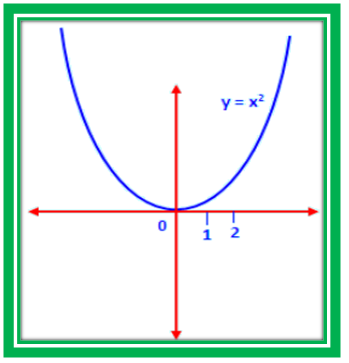
Check whether y = x² is increasing on the interval (0,∞).
Solution :
As per the procedure first let us find the first derivative.
dy/dx = 2 x
f'(x) = 2x
Now let us apply random values from the given interval.
x = 2 ∈ (0,∞)
f'(2) = 2(2)
= 4 > 0
x = 6 ∈ (0,∞)
f'(6) = 2(6)
= 12 > 0
So the given function is increasing in the interval (0,∞).
Example 2 :
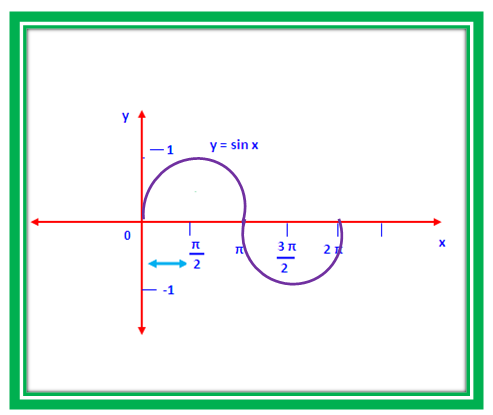
Check whether y = sin x is increasing on the interval (0, Π/2).
Solution :
As per the procedure first let us find the first derivative.
dy/dx = cos x
f'(x) = cos x
Now let us apply random values from the given interval
x = Π/3 ∈ (0,Π/2)
f'(Π/3) = cos Π/3
= 1/2 > 0
x = Π/6 ∈ (0,Π/2)
f'(Π/6) = cos Π/6
= √3/2 > 0
So, the given function is increasing in the interval (0, Π/2).
Example 3 :
Check whether y = 2x³+x²-20x is increasing on the interval (-∞, -2).
Solution :
As per the procedure first let us find the first derivative
f'(x) = 6x² + 2x
Now let us apply random values from the given interval
x = -5 ∈ (-∞, -2)
f'(-5) = 6(-5)² + 2(-5)
= 6(25) -10
= 150 - 10
= 140 > 0
x = -3 ∈ (-∞, -2)
f'(-3) = 6(-3)² + 2(-3)
= 54 - 6
= 48 > 0
So the given function is increasing in the interval (-∞,-2).
Subscribe to our ▶️ YouTube channel 🔴 for the latest videos, updates, and tips.
Kindly mail your feedback to v4formath@gmail.com
We always appreciate your feedback.
About Us | Contact Us | Privacy Policy
©All rights reserved. onlinemath4all.com

Recent Articles


-
10 Hard SAT Math Questions (Part - 44)
Jan 12, 26 06:35 AM
10 Hard SAT Math Questions (Part - 44) -
US Common Core K-12 Curricum Algebra Solving Simple Equations
Jan 07, 26 01:53 PM
US Common Core K-12 Curricum Algebra Solving Simple Equations -
10 Hard SAT Math Questions (Part - 4)
Jan 05, 26 06:56 PM
 10 Hard SAT Math Questions (Part - 4)