ROTATIONS AND ROTATIONAL SYMMETRY WORKSHEET
Subscribe to our ▶️ YouTube channel 🔴 for the latest videos, updates, and tips.
Problem 1 :
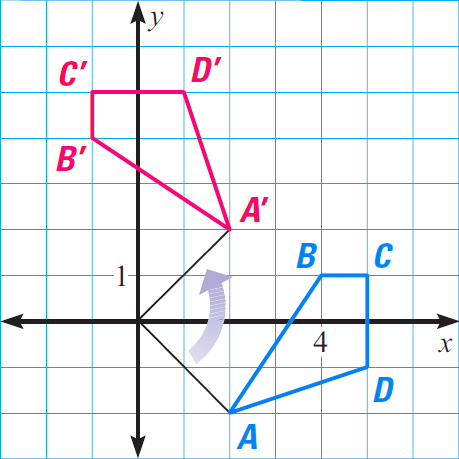
In a coordinate plane, sketch the quadrilateral whose vertices are A(2, - 2), B(4, 1), C(5, 1), and D(5, - 1). Then, rotate ABCD 90° counterclockwise about the origin and name the coordinates of the new vertices. Describe any patterns you see in the coordinates.
Problem 2 :
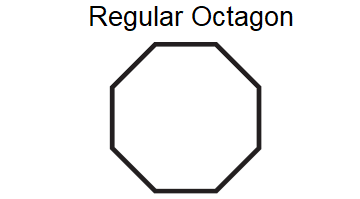
Does the figure shown below have rotational symmetry?
Problem 3 :
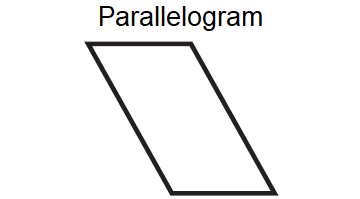
Does the figure shown below have rotational symmetry?
Problem 4 :
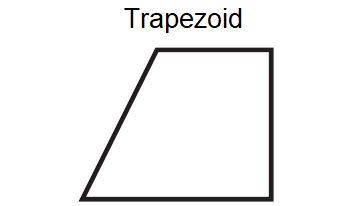
Does the figure shown below have rotational symmetry?
Problem 5 :
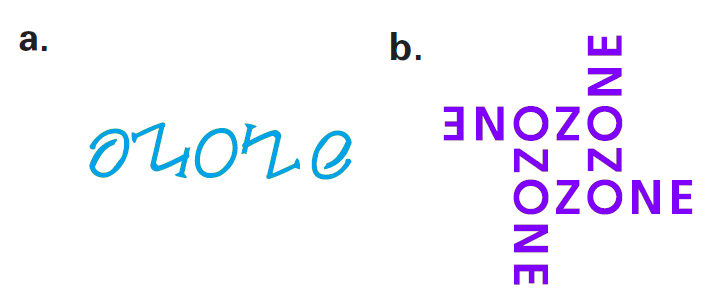
A music store called Ozone is running a contest for a store logo. The winning logo will be displayed on signs throughout the store and in the store’s advertisements. The only requirement is that the logo include the store’s name. Two of the entries are shown below. What do you notice about them?

1. Answer :
Plot the points, as shown in blue. Use a protractor, a compass, and a straightedge to find the rotated vertices. The coordinates of the preimage and image are listed below.
|
Figure ABCD A(2, -2) B( 4, 1) C(5, 1) D(5, -1) |
Figure A'B'C'D' A'(2, 2) B'( - 1, 4) C'(- 1, 5) D'(1, 5) |
In the list above, the x-coordinate of the image is the opposite of the y-coordinate of the pre-image. The y-coordinate of the image is the x-coordinate of the pre-image.
This transformation can be described as
(x, y) ----> (-y, x)
2. Answer :
The regular octagon shown above has rotational symmetry. It can be mapped onto itself by a clockwise or counterclockwise rotation of 45°, 90°, 135° or 180° about its center.
3. Answer :
The parallelogram regular shown above has rotational symmetry. It can be mapped onto itself by a clockwise or counterclockwise rotation of 180° about its center.
4. Answer :
The trapezoid shown above does not have rotational symmetry.
5. Answer :
Part (a) :
This design has rotational symmetry about its center. It can be mapped onto itself by a clockwise or counterclockwise rotation of 180°.
Part (b) :
This design also has rotational symmetry about its center. It can be mapped onto itself by a clockwise or counterclockwise rotation of 90° or 180°.
Subscribe to our ▶️ YouTube channel 🔴 for the latest videos, updates, and tips.
Kindly mail your feedback to v4formath@gmail.com
We always appreciate your feedback.
About Us | Contact Us | Privacy Policy
©All rights reserved. onlinemath4all.com

Recent Articles


-
Digital SAT Math Practice Test with Answers (Part - 17)
Sep 24, 26 12:05 PM
 Digital SAT Math Practice Test with Answers (Part - 17)
 -
Digital SAT Math Practice Test with Answers (Part - 16)
Sep 07, 26 11:23 AM
Digital SAT Math Practice Test with Answers (Part - 16) -
Digital SAT Math Practice Test with Answers (Part - 15)
Aug 23, 26 12:24 PM
 Digital SAT Math Practice Test with Answers (Part - 15)