HOW TO DETERMINE AN EXPONENTIAL FUNCTION FROM A TABLE OF VALUES
Subscribe to our ▶️ YouTube channel 🔴 for the latest videos, updates, and tips.
Here we are going to see how to determine if the given table of data represents the exponential function or not.
One method is to observe the shape of the graph. But the graph of an exponential function may resemble part of the graph of a quadratic function.
Another way is to use the problem-solving strategy look for a pattern with the data.
Let us look into some example problems to understand the above concept.
Example 1 :
Determine whether each set of data displays exponential behavior.

Solution :
The domain values are at regular intervals of 10. Let’s see if there is a common factor among the range values
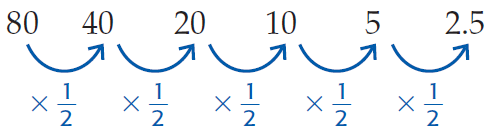
Since the domain values are at regular intervals and the range values have a common factor, the data are probably exponential. The equation for the data may involve (1/2)x
Exponential equation of the given data is (1/2)x
Example 2 :
Determine whether each set of data displays exponential behavior.

Solution :
The domain values are at regular intervals of 10. The range values have a common difference 6.
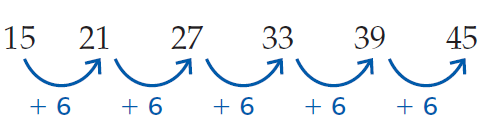
The data do not display exponential behavior, but rather linear behavior.
Let us see the next example on "How to determine an exponential function from a table of values".
Example 3 :
Determine whether each set of data displays exponential behavior.

Solution :
The domain values are at regular intervals of 1. Let’s see if there is a common factor among the range values
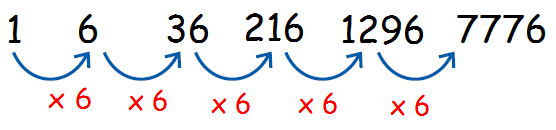
Since the domain values are at regular intervals and the range values have a common factor, the data are probably exponential. The equation for the data may involve 6x
Exponential equation of the given data is 6x
Example 4 :
Determine whether each set of data displays exponential behavior.

Solution :
The domain values are at regular intervals of 2. The range values have a common difference 4.
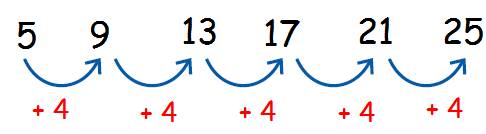
The data do not display exponential behavior, but rather linear behavior.
Example 5 :
Determine whether each set of data displays exponential behavior.

Solution :
The domain values are at regular intervals of 1. The range values have a common difference 3.
The data do not display exponential behavior, but rather linear behavior.
Example 6 :
Determine whether each set of data displays exponential behavior.

Solution :
The domain values are at regular intervals of 1. Let’s see if there is a common factor among the range values
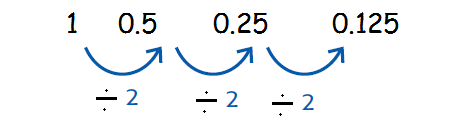
Since the domain values are at regular intervals and the range values have a common factor, the data are probably exponential.
The equation for the data may involve 1/2x
So, exponential equation of the given data is 1/2x.
Subscribe to our ▶️ YouTube channel 🔴 for the latest videos, updates, and tips.
Kindly mail your feedback to v4formath@gmail.com
We always appreciate your feedback.
About Us | Contact Us | Privacy Policy
©All rights reserved. onlinemath4all.com

Recent Articles


-
Digital SAT Math Practice Test with Answers (Part - 18)
Oct 16, 26 11:02 AM
 Digital SAT Math Practice Test with Answers (Part - 18)
 -
AP Calculus BC Problems with Solutions
Sep 30, 26 01:08 PM
 AP Calculus BC Problems with Solutions
 -
Digital SAT Math Practice Test with Answers (Part - 17)
Sep 30, 26 01:00 PM
 Digital SAT Math Practice Test with Answers (Part - 17)